
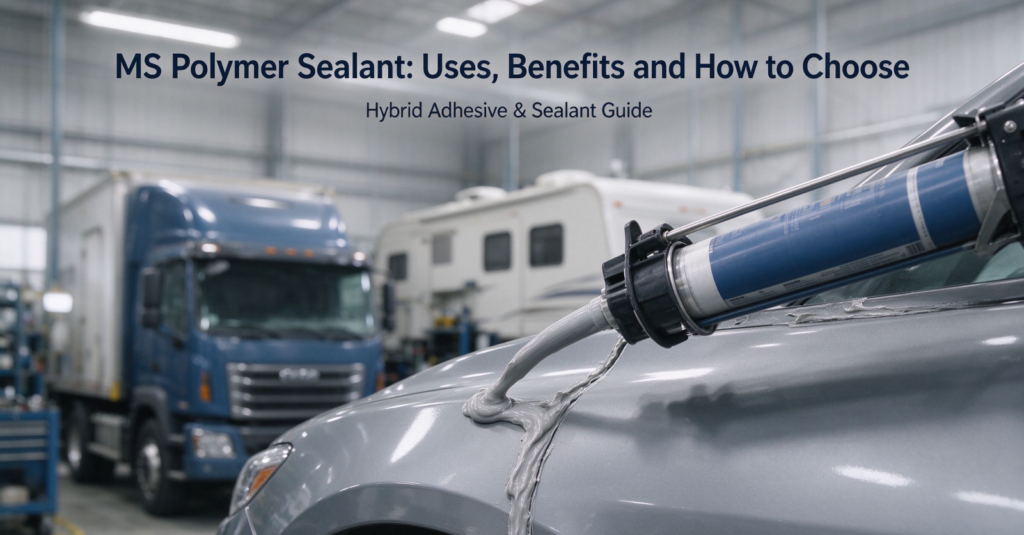
MS polymer sealant is a flexible material for sealing joints and bonding compatible surfaces. Buyers often consider it when an assembly needs a paintable finish, movement tolerance and a practical application process.
However, the chemistry name alone does not tell you whether a product will suit your job. A body seam, a bonded panel and a weather-exposed joint can need different grades. This guide explains what to check before choosing a material for vehicle assembly or industrial use.
What Is MS Polymer Sealant?
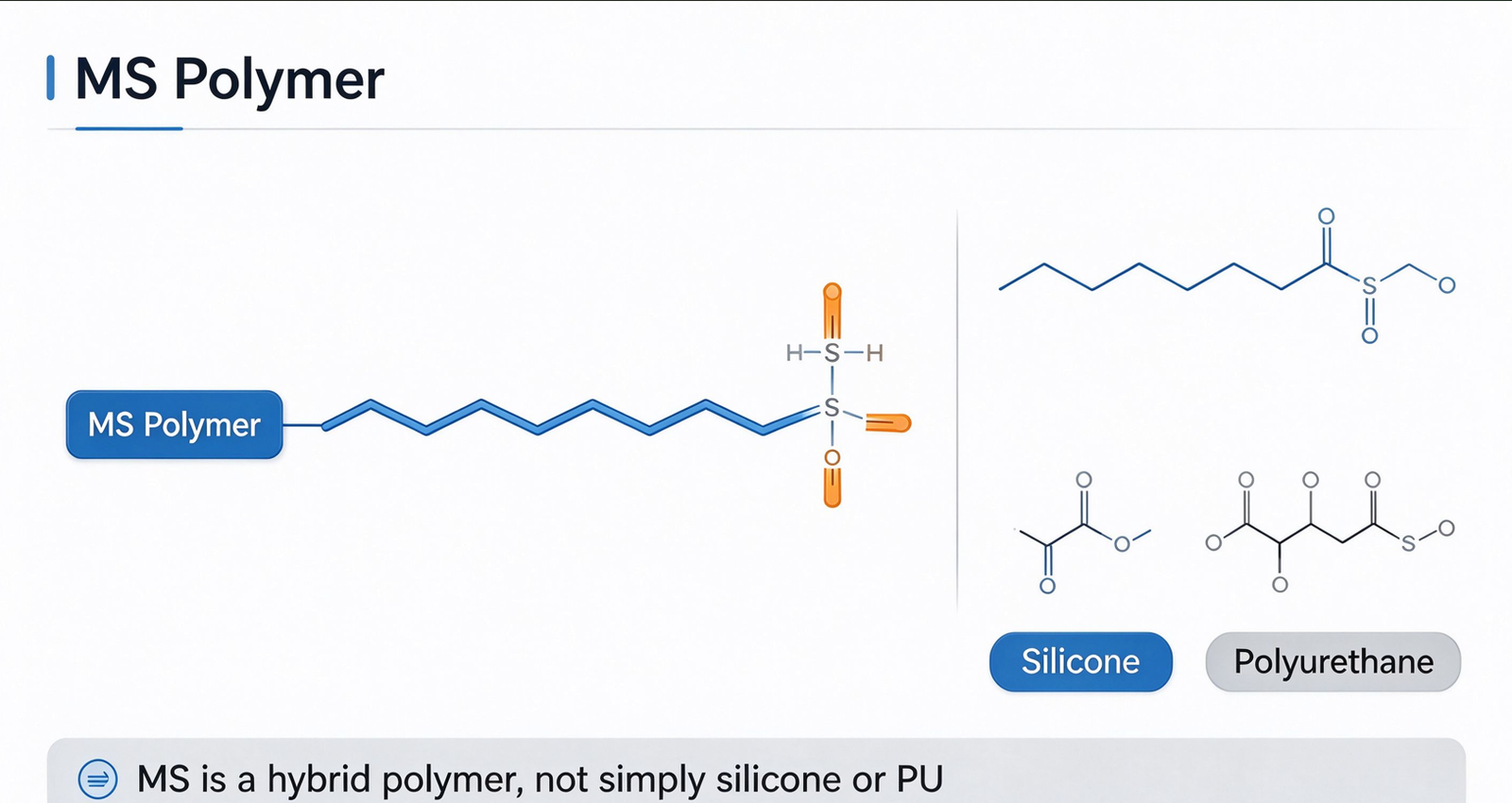
MS polymer technology uses a polymer backbone with reactive silane end groups. Kaneka describes its MS Polymer technology as a functionalized polyether system. Formulators use these resins to produce moisture-curing sealants and adhesives. It is a different chemistry from conventional silicone, rather than simply a mixture of silicone and polyurethane. See Kaneka’s chemistry overview.
You may also encounter the broader terms hybrid polymer sealant, silane-modified polymer and silane-terminated polymer. These labels describe related technologies, but they do not make finished products interchangeable. Always compare the technical data sheet for the exact grade.
 Where Is MS Polymer Sealant Used?
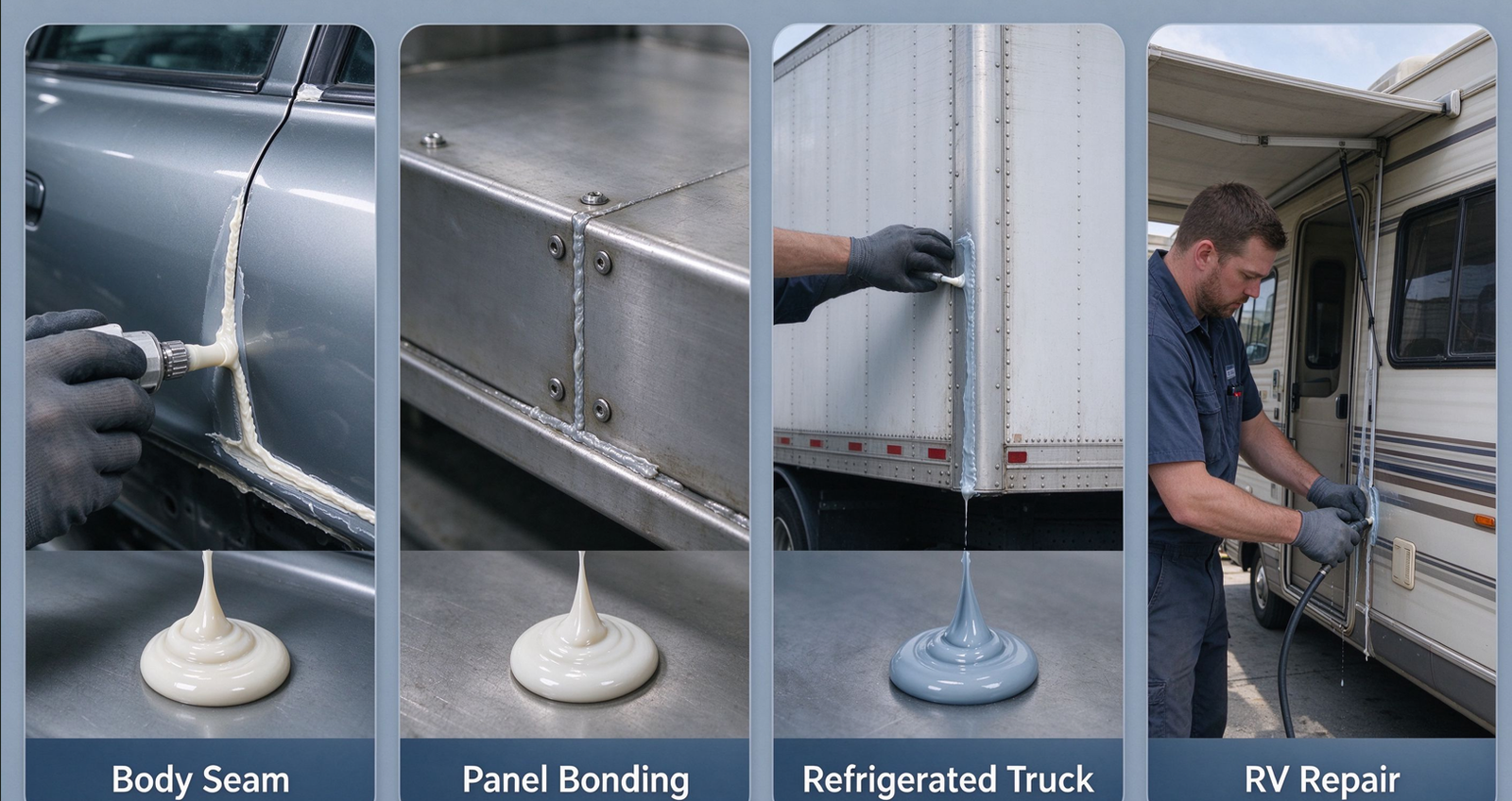
For this guide, the main applications are vehicle body seams, panel joints, refrigerated truck assemblies and caravan repairs. Our MS polymer sealant product page introduces these application areas.
When reviewing a proposed use, separate two jobs:
- Sealing: keeping water or other unwanted material out of a joint.
- Bonding: transferring loads between joined parts.
A product that seals a gap does not automatically provide an approved structural bond. For example, Sika describes a specific STP adhesive for vehicle-component bonding and requires trials on actual substrates. That is a grade-specific application, not approval for every hybrid sealant. Read Sika’s vehicle-assembly guidance.
For your project, identify the joint’s purpose before comparing strength, flexibility or price.
MS Polymer Sealant vs. Silicone and Polyurethane
Start with the application requirements. Then use chemistry to narrow your shortlist.
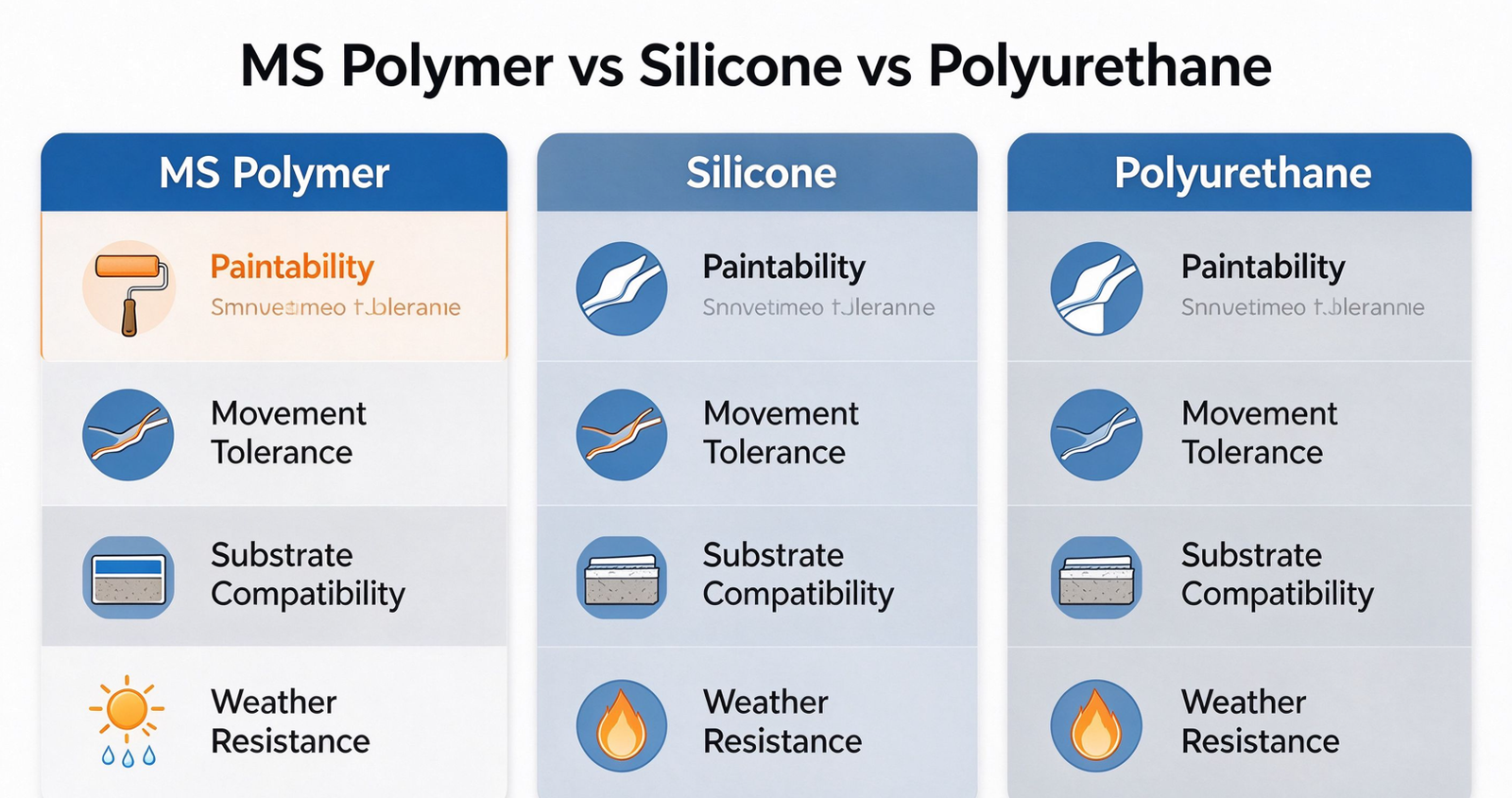
| Selection question | MS polymer or related hybrid | Conventional silicone | Polyurethane |
|---|---|---|---|
| Will the joint receive paint? | Often considered for paintable joints; test the coating | Usually difficult to paint | Check the product’s painting instructions |
| Does the assembly move? | Compare the selected grade’s movement and strength data | Compare the selected grade’s movement data | Compare the selected grade’s movement and strength data |
| What should decide the purchase? | Substrate, finishing and service trials | Substrate, finishing and service trials | Substrate, finishing and service trials |
Kaneka identifies paintability as a useful distinction between its MS Polymer-based products and conventional silicones. However, this does not establish a universal winner. A buyer still needs evidence for the complete joint system. Kaneka’s technology comparison provides background on those differences.
If your project needs another chemistry, review our silicone sealant and polyurethane sealant pages alongside the relevant technical documents.
How to Choose the Right Grade
1. Identify the Actual Surface
Write down both substrates and their surface treatments. “Metal” is less useful than painted aluminum with a named coating. Likewise, specify the plastic rather than describing it only as a panel.
Next, send representative samples for testing. Sika’s STP product guidance calls for compatibility and adhesion checks on the original materials. It also highlights stress-cracking concerns for susceptible substrates. Use that approach when qualifying your own assembly.
2. Match the Product to the Joint
Prepare a simple drawing with the joint width, depth and expected movement. For a bonded component, include its size, support points and loading conditions.
Then ask the supplier to explain why the proposed grade suits that design. A single headline tensile-strength value cannot answer every application question. Request the test method and relevant conditions with the result.
3. Test the Paint System
Paintability is a common reason to consider MS polymer sealant. Still, the word “paintable” does not guarantee compatibility with every coating.
Run a trial using the intended sealant, paint and production sequence. Check adhesion, drying, appearance and the finish after movement. Also confirm when to apply the coating. A skinned surface is not necessarily ready for every finishing process.
As a practical example, Soudal’s hybrid-sealant data sheet recommends a compatibility test before overpainting. Those instructions belong to that particular product; they should not become universal specifications for another supplier’s material. Read the manufacturer’s technical data sheet.
4. Check Cure Conditions Against Your Process
Plan for the difference between surface skinning and usable strength. Review the selected grade’s cure data before setting handling, painting or service times.
Temperature, humidity and the application geometry matter. Soudal’s technical sheet explicitly notes environmental and substrate effects on curing. Therefore, avoid treating a supplier’s laboratory figure as a fixed production-line deadline.
5. Define Exposure Before Requesting a Quote
Tell the supplier whether the joint faces outdoor weather, cleaning agents, standing water or occasional chemical splashes. Include any temperature requirements.
Do not assume that a weather-resistant product also suits continuous immersion. The Soudal example above specifically excludes continuous water immersion. Ask for written confirmation of your own grade’s permitted exposure.
A Practical Application Checklist
Use the chosen manufacturer’s instructions to develop your work procedure. The following checklist helps organize a qualification trial:
- Check the material. Confirm the grade, batch, shelf life and storage history.
- Prepare the surfaces. Follow the specified cleaning and pretreatment process.
- Set up the joint. Confirm dimensions, access and any required supports.
- Control application. Record the nozzle, equipment settings and working conditions.
- Record timing. Note dispensing, assembly, tooling and handling times.
- Inspect the result. Check coverage, appearance, adhesion and the painted finish where relevant.
Finally, repeat the trial under conditions that reflect normal production. Keep the results with the approved work instructions.
Look Beyond a “Low-VOC” Label
Buyers can also ask about formulation choices and supporting documentation. Kaneka currently describes development areas that include tin-free formulations, bio-based materials and weatherability improvements. These are technology options, not proof that every finished MS polymer sealant has those attributes. Explore Kaneka’s application development areas.
For procurement, turn broad claims into specific questions:
- Which grade does the test report cover?
- What measurement method supports the emissions claim?
- Does the supplied safety data sheet match the proposed product?
- Can the supplier maintain the agreed specification between batches?
This makes supplier comparisons more useful than relying on a general “eco-friendly” description.
What Should You Send to a Sealant Manufacturer?
A clear enquiry helps a manufacturer assess the job. Include:
- The application and whether it involves sealing, bonding or both.
- The substrates, coatings and available samples.
- Joint dimensions and service conditions.
- Your application equipment, assembly time and painting process.
- Preferred color, packaging, estimated quantity and destination market.
- Any required test reports or customer specifications.
For private-label supply, add your label language and branding requirements. You can review our manufacturing services before preparing an enquiry.
Frequently Asked Questions
Is MS Polymer Sealant the Same as Silicone?
No. Kaneka’s MS Polymer technology has a polyether backbone with silane end groups. Conventional silicone uses a different polymer structure. Similar application claims do not mean identical chemistry.
Can You Paint Over MS Polymer Sealant?
Many grades offer paintability. Confirm the coating and painting interval with the manufacturer, then test the complete system. Do not assume that approval for one paint applies to another.
Does It Always Need a Primer?
There is no universal answer. Follow the grade-specific preparation instructions and qualify the actual surfaces. A primerless claim does not remove the need for compatibility testing.
How Long Does It Take to Cure?
Use the technical data for the selected grade and your working conditions. Separate skin time, handling time and readiness for service when planning the process.
Is It Suitable for Every Automotive Bond?
No. Confirm the intended use and approval requirements. Do not substitute a general sealant for a specified structural, glazing or other safety-critical adhesive.
Discuss Your MS Polymer Sealant Application
Choosing MS polymer sealant starts with the surfaces, joint design and production process. A useful supplier discussion connects those requirements to a specific grade and a documented trial.
Explore Zibo Changheng’s MS polymer sealant, or send your application details to discuss product selection, packaging and private-label requirements.